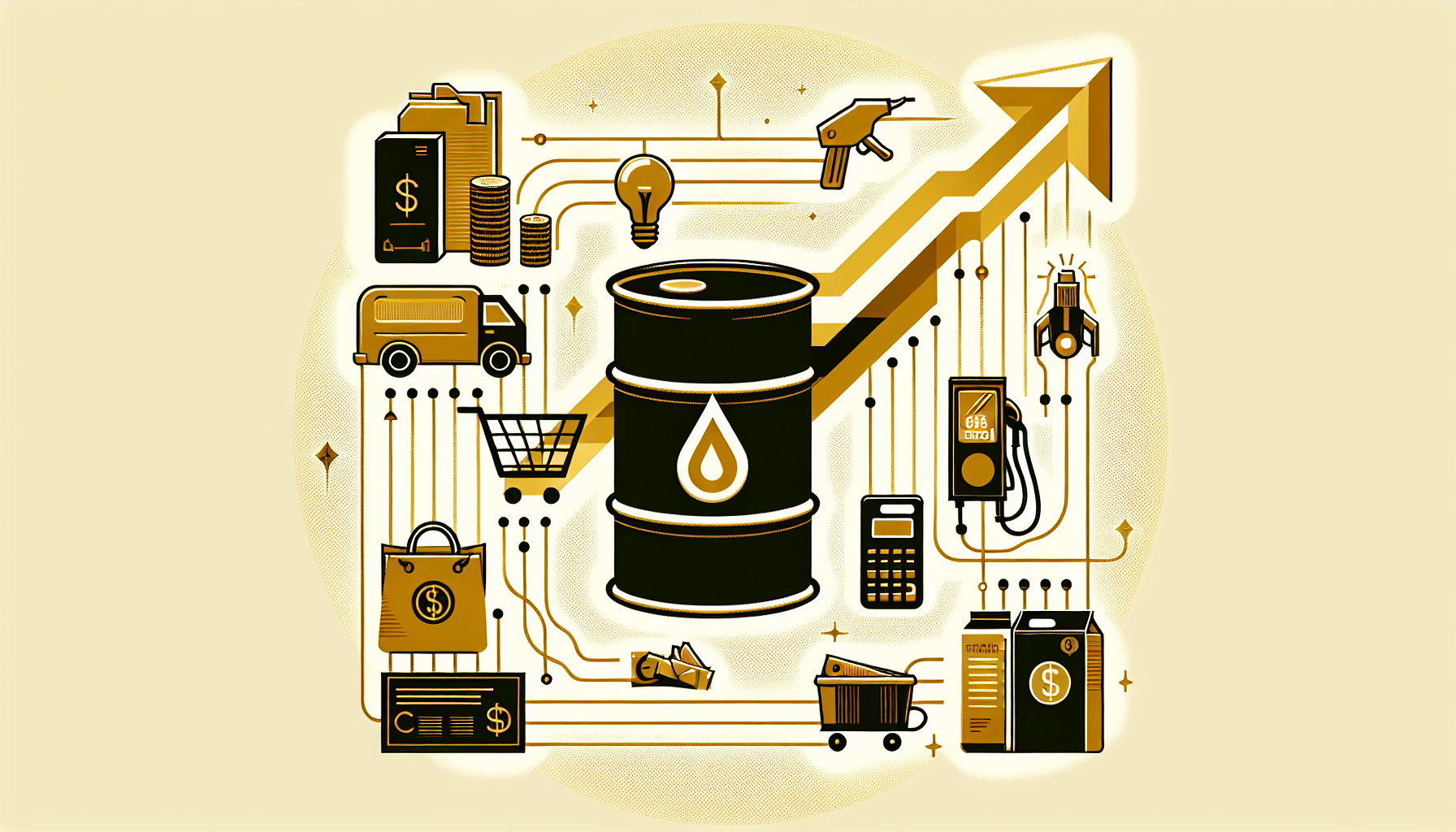
Oil prices just crossed $100 per barrel for the first time in years. If you're wondering what a barrel of crude oil has to do with your grocery bill or your morning commute, the answer is: everything. Oil is baked into the price of nearly every product and service you buy — and when it spikes, your entire budget feels it.
The good news? You're not powerless. This guide breaks down exactly how rising oil prices ripple through your daily spending and gives you 10 concrete ways to adapt without turning your life upside down.
This article is for educational purposes only and does not constitute financial advice.
Why Oil Prices Affect Everything You Buy
Think of oil as the invisible ingredient in your budget. Every product on a store shelf was manufactured using energy and shipped on a truck, train, or container ship that runs on fuel. Every service you use — from restaurants to ride-shares — depends on people and supplies moving from point A to point B.
When oil prices rise, here's the chain reaction:
Oil goes up → Transportation costs go up → Businesses pay more to ship goods → Those costs get passed to you.
It doesn't stop at the gas pump. Oil is a raw material for plastics, chemicals, and synthetic fabrics. It powers heating systems and electricity generation. It's in the fertilizer that grows your food. When crude oil spikes, the effects spread across the entire economy like ripples in a pond — and they reach your wallet within weeks.
What's Happening Right Now
Brent crude oil has surged from roughly $72 per barrel in late 2025 to over $106 per barrel in March 2026. That's nearly a 50% increase in just a few months.
The primary driver is disruption to shipping routes through the Strait of Hormuz — one of the world's most critical oil chokepoints, through which roughly 20% of global oil supply passes daily. Ongoing military conflict in the region has created uncertainty about supply, and markets have responded with sharp price increases.
The national average for a gallon of regular gasoline has already climbed past $4.00, with some states seeing prices well above $5.00. And gas is just the most visible piece of the puzzle.
How It Hits Your Wallet — Category by Category
Let's get specific about where you'll feel this in your monthly budget:
Gas and Transportation
This is the most obvious hit. The average American household drives about 1,200 miles per month. With gas prices up roughly $1.00–$1.50 per gallon from their 2025 lows, that translates to an extra $40–$60 per month at the pump — more if you have a longer commute or a less fuel-efficient vehicle. Ride-share services like Uber and Lyft have added fuel surcharges, too.
Groceries
Food prices are especially sensitive to oil because of how far your food travels. The average grocery item travels over 1,500 miles before it reaches the shelf. When diesel prices climb, so do the costs of trucking those goods. Expect 5–8% price increases on transported goods — produce, dairy, meat, and packaged foods all get more expensive. Store-brand products that rely on simpler supply chains may hold up better.
Utilities
Natural gas and heating oil prices tend to follow crude oil trends. If you heat with oil (common in the Northeast), your costs could jump significantly. Even electricity bills can rise as power plants that use natural gas or oil face higher fuel costs. Summer cooling bills may also be higher as energy prices stay elevated.
Airfare and Travel
Jet fuel is one of the airline industry's biggest expenses. When oil spikes, fuel surcharges come back — either as visible add-ons or quietly baked into higher base fares. If you have travel planned for the spring or summer, expect to pay 10–20% more for flights compared to the same routes last year.
Delivery and Online Shopping
Every Amazon package, DoorDash order, and grocery delivery is carried by a vehicle burning fuel. Delivery services are already raising fees or reducing free-delivery thresholds. Some restaurants are increasing menu prices on delivery platforms to offset the higher costs of getting ingredients to their kitchens in the first place.
The 50/30/20 Problem: When "Needs" Inflate
If you follow a budget framework like the 50/30/20 rule, rising oil prices create a specific challenge: your "needs" category — the 50% bucket covering essentials like gas, groceries, and utilities — starts growing, and it squeezes everything else.
Here's what that looks like in practice. Say your monthly take-home is $4,000. Under normal conditions, you'd allocate $2,000 to needs. But with higher gas, grocery, and utility costs, your needs might now total $2,200–$2,300. That extra $200–$300 has to come from somewhere — usually your wants or your savings.
The key is to rebalance consciously rather than letting it happen by accident. If you know your needs have increased, deliberately decide what to trim from wants rather than watching your savings evaporate without realizing it.
10 Practical Ways to Adapt Your Budget
You can't control oil prices. But you can control how you respond. Here are 10 things you can do this week:
1. Reduce discretionary driving and combine errands. Plan your route before you leave the house. Group grocery runs, pickups, and appointments into a single trip instead of making multiple short drives throughout the week. One well-planned outing burns far less gas than four spontaneous ones.
2. Use gas price apps. Apps like GasBuddy show you the cheapest gas stations near you in real time. The difference between stations can be $0.30–$0.50 per gallon — on a 15-gallon fill-up, that's $4.50–$7.50 saved each time. It adds up fast.
3. Switch to store brands for groceries. Name-brand products carry higher margins that get inflated even further when shipping costs rise. Store brands and generics often come from the same manufacturers but cost 20–30% less. This is one of the easiest wins available right now.
4. Meal prep to reduce food waste. The average American household wastes about 30% of the food it buys. When groceries cost more, waste hurts more. Plan your meals for the week, buy exactly what you need, and prep in batches. You'll eat better and spend less.
5. Review your subscriptions. When your essential costs rise, it's time to audit the non-essentials. List every recurring charge — streaming services, apps, memberships, boxes — and cancel anything you haven't used in the last 30 days. Even cutting $30–$50/month in subscriptions helps offset higher gas costs.
6. Adjust your thermostat 2–3 degrees. Turning your thermostat down 2 degrees in winter (or up 2 degrees in summer) can cut heating/cooling costs by roughly 5–10%. It's barely noticeable in comfort but meaningful on your utility bill, especially when energy prices are elevated.
7. Carpool or use public transit where possible. Splitting a commute with one coworker cuts your gas costs in half. If you live near a transit line, even using it two or three days a week makes a difference. Some employers also offer pre-tax transit benefits that reduce the cost further.
8. Delay non-essential purchases. That new piece of furniture, the electronics upgrade, the home project supplies — all of these are more expensive right now because of higher shipping and materials costs. Waiting 3–6 months for oil prices to stabilize could save you 10–15% on big-ticket items.
9. Cook at home instead of ordering delivery. A $15 delivery order often costs $25+ after fees, tips, and markups — and those fees are climbing. Cooking at home is dramatically cheaper per meal, especially if you meal prep. Even replacing two delivery orders per week with home-cooked meals saves $80–$100/month.
10. Track your spending to find hidden waste. You can't fix what you can't see. Spend 20 minutes reviewing your last month's bank statement and categorize every transaction. Most people find at least $100–$200 in spending they didn't realize was happening — forgotten subscriptions, impulse purchases, duplicate services.
Track Your Budget Through This
When costs are shifting beneath your feet, visibility is everything. You need to know exactly where your money is going — not last month's guess, but this month's reality. A good budgeting tool turns a vague sense of "money is tight" into specific, actionable numbers.
PocketSmith connects to your bank accounts and shows you a calendar view of your spending and income. It can forecast your cash flow months ahead, which is especially useful when you're trying to figure out how long a price spike will affect your bottom line.
Build a Buffer While You Can
Oil price spikes are also a reminder of why an emergency fund matters. If your budget is already tight, an extra $150–$250/month in essential costs can push you into debt fast — unless you have a cushion.
If you don't have an emergency fund yet, even $500–$1,000 set aside in a high-yield savings account gives you breathing room. Start with whatever you can — $25 or $50 per paycheck — and automate it so it happens without thinking.
For deeper reading on how to structure your money when essentials are eating more than they should, check out All Your Worth by Elizabeth Warren — the book that popularized the 50/30/20 framework and offers practical advice for exactly this kind of situation.
The Bottom Line
Oil prices are cyclical. They spike, they stabilize, they fall. This has happened before — in 2008, in 2014, in 2022 — and it will happen again. The current surge is real and it's hitting household budgets hard, but it won't last forever.
What will last are the habits you build in response. Learning to track your spending, reduce waste, meal prep, combine errands, and consciously manage your budget — those skills pay dividends long after oil prices come back down.
Don't panic. Make a plan. Start with the two or three tips above that are easiest for you, and build from there. Your budget can handle this — especially if you take control of it now.